Tax DebtMulti-Week Email Campaign
A multi-week drip sequence designed to educate tax debt prospects, maintain engagement over time, and create repeat opportunities to begin a conversation.
Campaign
Tax Debt Outreach
Format
Multi-Week Drip
Leads Reached
1,470
Messages Sent
3,635
01 — Overview
Staying present during a complex decision
Tax debt decisions can take time. This campaign used a multi-week drip strategy to keep the tax shop visible while providing repeated, timely prompts for leads who may not be ready to respond after a first message.
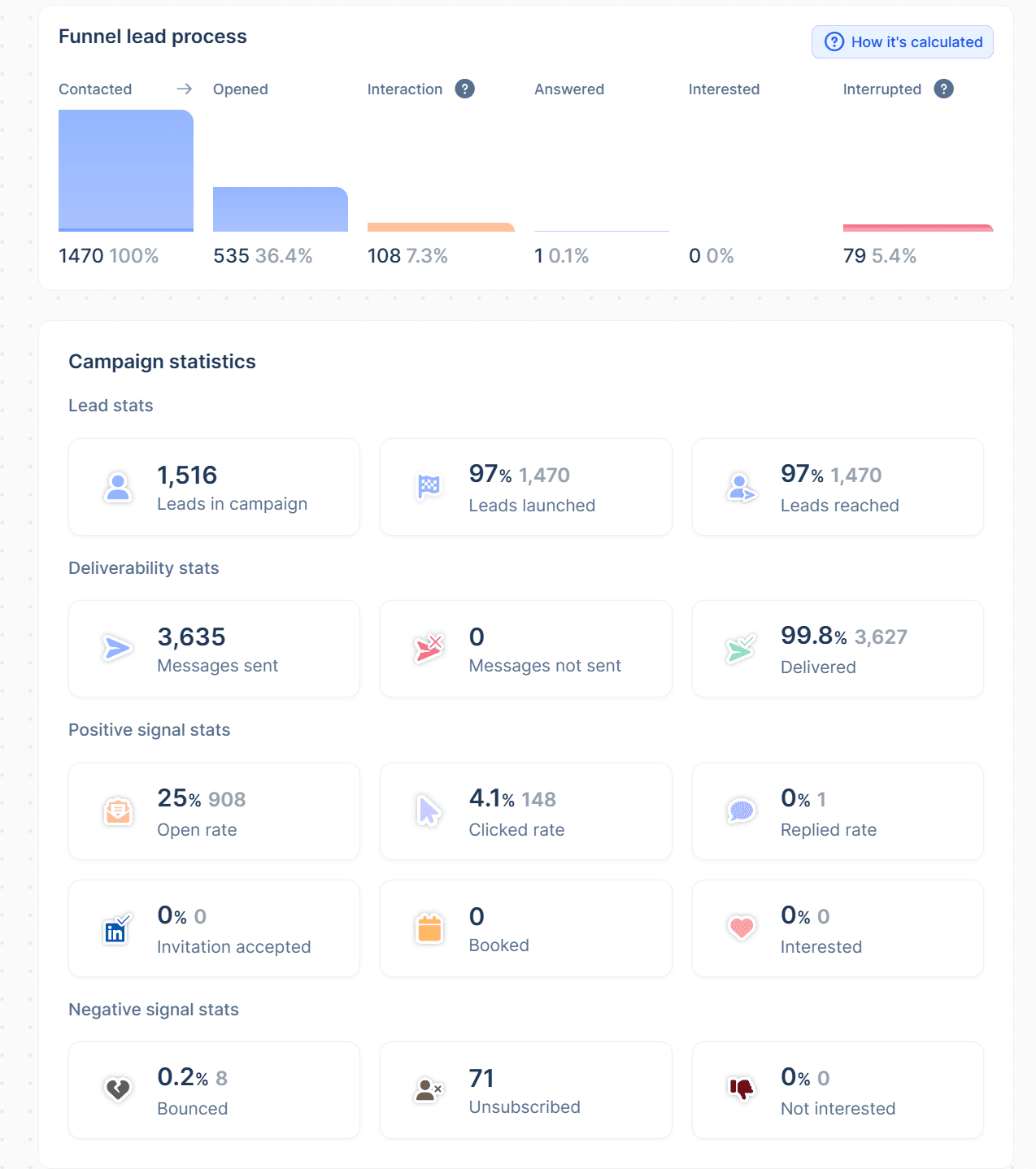
The campaign included 1,516 leads, with 1,470 launched and reached. Across the sequence, it sent 3,635 messages and recorded a 99.8% delivery rate, demonstrating strong list delivery performance. [2]



The Challenge
A tax debt lead may need time. The message needs a plan.
Tax debt assistance is not typically an immediate purchase decision. Prospects may be researching options, comparing providers, or waiting until they are ready to engage. The campaign needed to create consistent contact without relying on a single email.
Core campaign question
How can a sequence remain helpful and visible over multiple weeks while giving leads clear opportunities to take the next step?
02 — Sequence Strategy
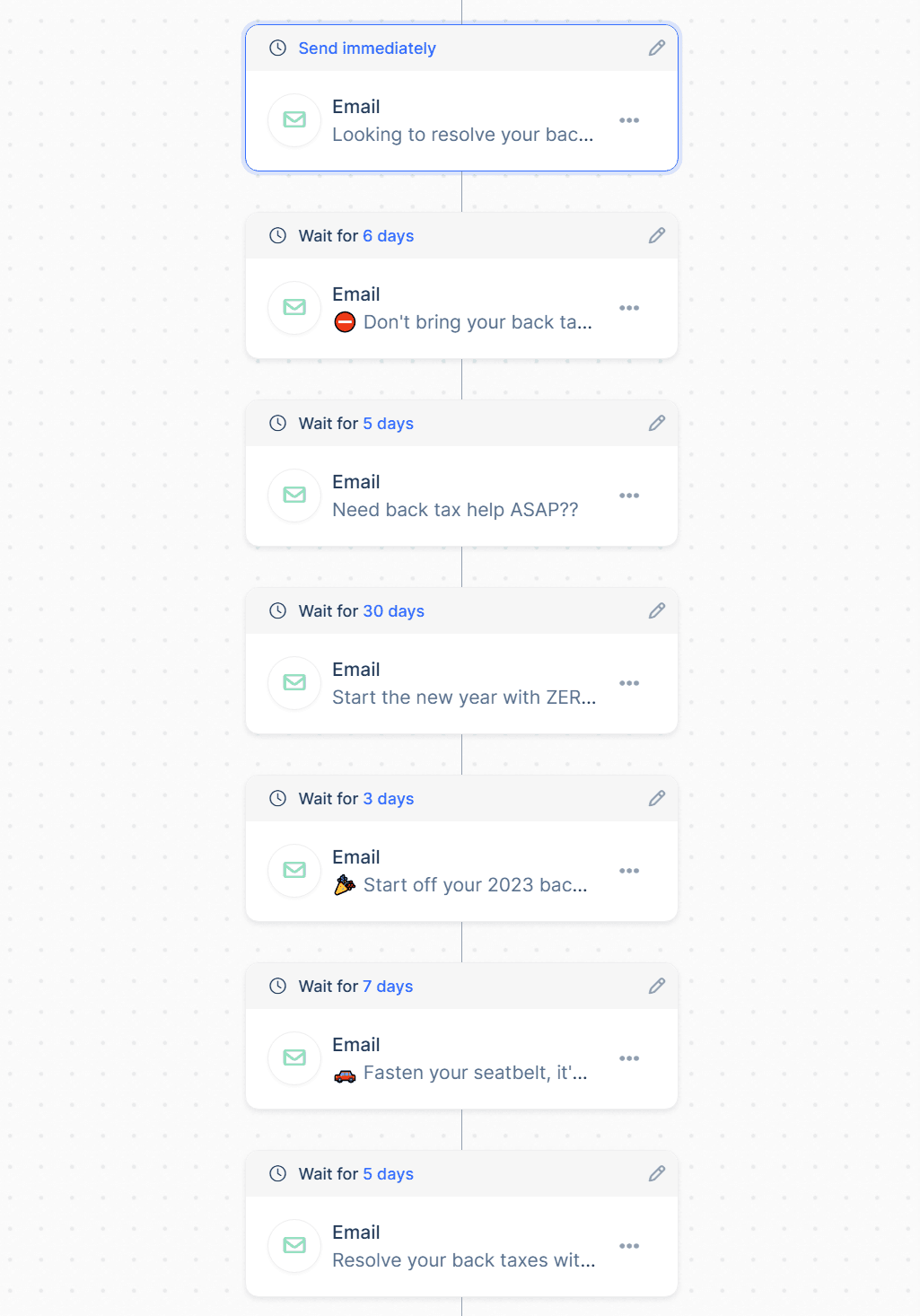
A drip sequence built around timing
The campaign used staggered follow-ups to create several opportunities for leads to open, click, and respond over the course of multiple weeks.
Introduce
Send an initial outreach message to introduce tax debt help and establish the reason for contacting the prospect.
Follow Up
Wait before sending a second message, giving leads space to consider the first outreach while keeping the campaign active.
Re-Engage
Continue the sequence with a fresh angle and a clear reminder that tax debt support remains available.
Measure
Track delivery, opens, clicks, replies, and negative signals to understand where the sequence is creating attention or friction.
03 — Early Sequence Results
Engagement Across the First Sends
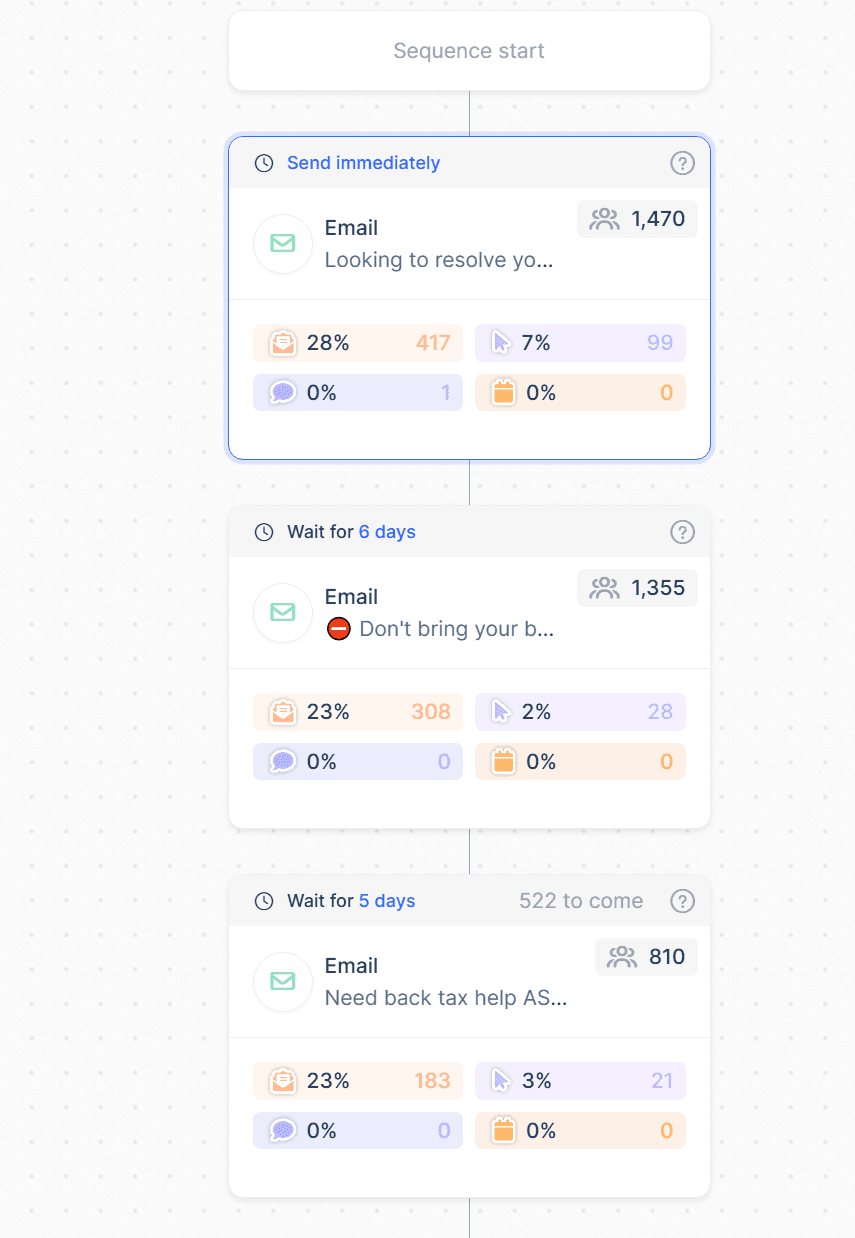
The first email was sent immediately to 1,470 leads and generated a 28% open rate with 417 opens. It also generated a 7% click rate with 99 clicks. [3]
The next two sequence emails followed after waits of six and five days. Each recorded a 23% open rate; the second message recorded 308 opens and 28 clicks, while the third recorded 183 opens and 21 clicks. [3]
04 — Campaign Priorities
Built for consistent, useful outreach
Intentional Timing
Space messages across days so the campaign stays visible without relying on a one-time outreach attempt.
Clear Messaging
Keep each email focused on a clear reason to revisit tax debt support and take a next action.
Performance Feedback
Use open, click, reply, unsubscribe, and bounce data to determine where future subject lines, copy, or calls to action can improve.
05 — Email Content
Helping Leads Return to the Decision
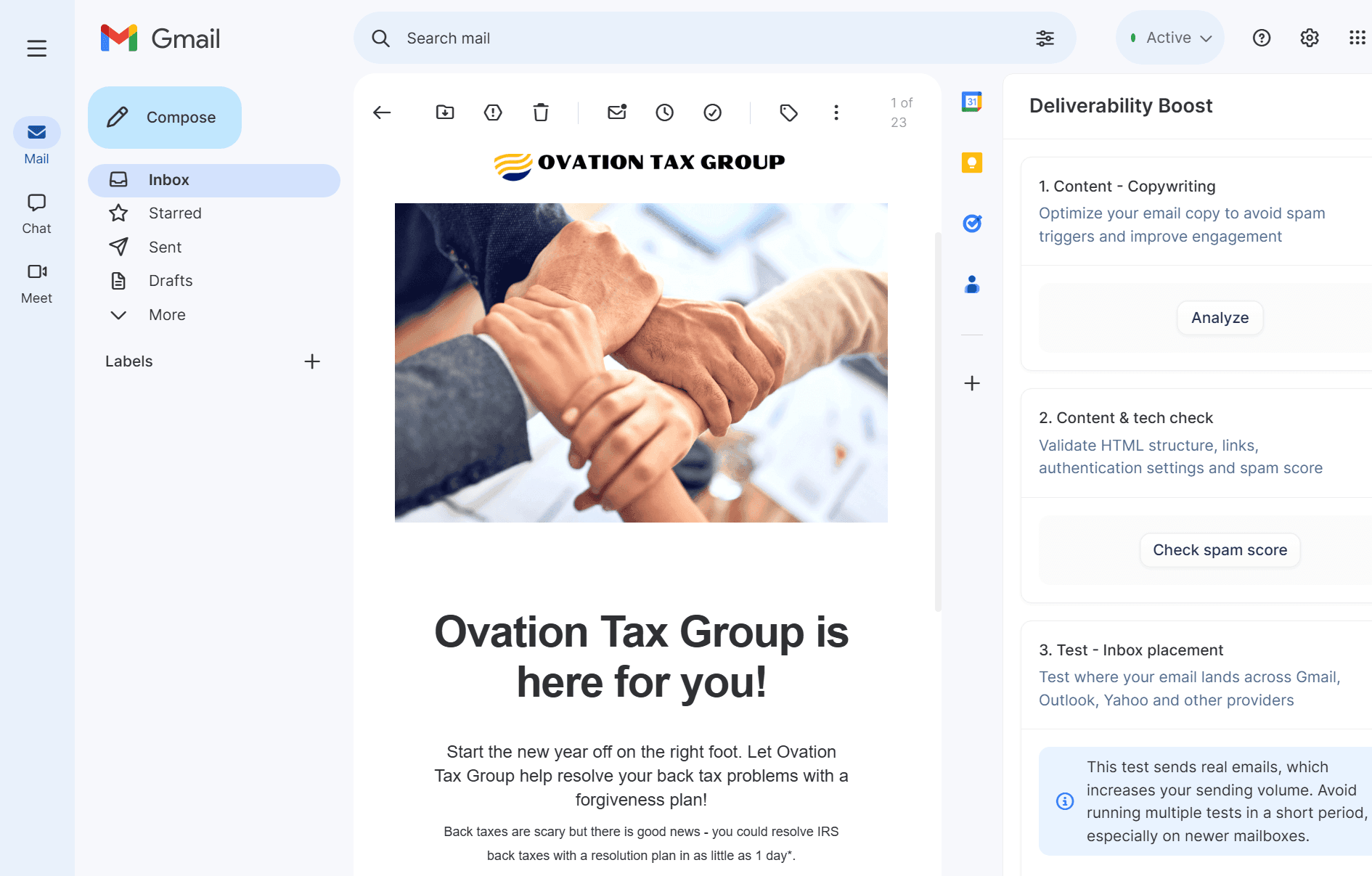
Each message in the drip campaign was designed to bring leads back to the central question: whether they needed help resolving tax debt.
Instead of treating follow-ups as duplicates, the sequence used separate sends to reintroduce the opportunity, keep support top of mind, and create multiple chances for a prospect to interact.
Messaging takeaway
Follow-up works best when it gives a lead a renewed reason to consider action, rather than simply repeating the first message.
06 — Performance Overview
Strong Delivery, Measurable Engagement
Of the 3,635 messages sent, 3,627 were delivered, producing a 99.8% delivery rate. The campaign recorded 908 opensfor a 25% overall open rate and 148 clicks for a 4.1% overall click rate. [2]
Negative signals remained limited: the report shows 8 bounces (0.2%) and 71 unsubscribes. The campaign report also showed one reply, with no booked meetings or marked interested leads in this reporting view. [2]
99.8%
Delivery rate
25%
Overall open rate
07 — Funnel Insights
Where the Campaign Created Attention
The funnel report shows that 535 leads opened at least one campaign message, representing 36.4% of contacted leads. It also recorded 108 interactions, or 7.3% of contacted leads. [2]
These signals create a useful next-step audience for future testing: people who opened or clicked can receive more targeted follow-ups, while message content can be refined to strengthen replies and booked conversations.
- ✓535 leads opened at least one message
- ✓108 recorded campaign interactions
- ✓A clear audience for segmented retargeting
08 — Optimization
From Engagement to More Conversations
The campaign achieved strong delivery and created measurable opens and clicks. The next opportunity is to turn that attention into higher-intent actions, including replies, consultation requests, and booked conversations.
Future iterations can build on the behavior of openers and clickers, test new subject lines and calls to action, and adjust timing based on the performance of each step in the sequence.
Next Tests
Segment engaged leads
Create focused follow-up campaigns for people who opened or clicked campaign messages.
Test calls to action
Compare direct consultation prompts with educational resource, calculator, or assessment-based actions.
Improve reply conversion
Test subject lines, follow-up language, and more specific prompts to increase responses and booked conversations.
09 — Takeaways
Moving Forward
The multi-week campaign established a reliable deliverability base and generated measurable engagement. Future refinements can focus on turning that engagement into more direct lead conversations.
More Segmentation
Create separate follow-up paths for leads who opened, clicked, or remained inactive during the campaign.
CTA Testing
Test different calls to action that may lower the barrier to responding, such as an assessment, calculator, or short consultation request.
Reply-Focused Messaging
Refine follow-up copy around clear, simple prompts that encourage interested prospects to reply and begin a conversation.
Your business deserves
a better website.
Let's build a digital experience that represents your brand, reaches your audience, and helps your business grow.